

Cefdinir Pediatric Dose Calculator
Get cefdinir dosage by weight for children and convert mg/kg guidance into mL per dose for common suspension strengths.
Usual oral dose for children 6 months and older: 14 mg/kg per day, as 7 mg/kg every 12 hours or 14 mg/kg once daily (skin infections: every 12 hours only), max 600 mg per day. Enter weight for the mL on your bottle; give the dose your child's prescriber ordered.
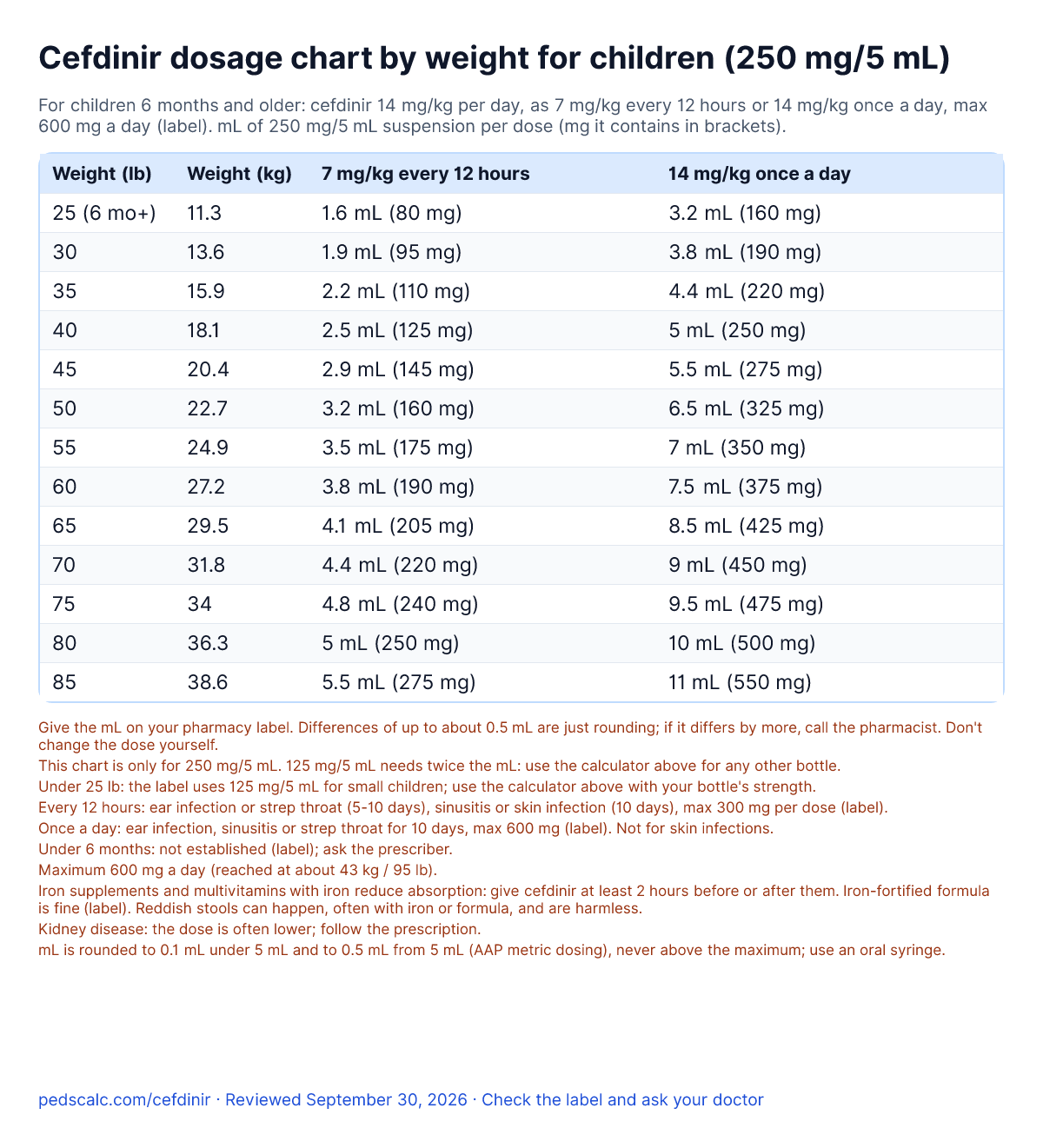
Cefdinir dosage chart by weight for children (250 mg/5 mL)
For children 6 months and older: cefdinir 14 mg/kg per day, as 7 mg/kg every 12 hours or 14 mg/kg once a day, max 600 mg a day (label). Skin infections use every 12 hours only. Use the column that matches the dose your child's prescriber ordered.
- Give the mL on your pharmacy label. Differences of up to about 0.5 mL are just rounding; if it differs by more, call the pharmacist. Don't change the dose yourself.
- This chart is only for 250 mg/5 mL. 125 mg/5 mL needs twice the mL: use the calculator above for any other bottle.
- Under 25 lb: the label uses 125 mg/5 mL for small children; use the calculator above with your bottle's strength.
| Weight (lb) | Weight (kg) | 7 mg/kg every 12 hoursmL of 250 mg/5 mL suspension per dose (mg it contains) | 14 mg/kg once a daymL of 250 mg/5 mL suspension per dose (mg it contains) |
|---|---|---|---|
| 25check age: 6 months and older | 11.3 | 1.6 mL (80 mg) | 3.2 mL (160 mg) |
| 30 | 13.6 | 1.9 mL (95 mg) | 3.8 mL (190 mg) |
| 35 | 15.9 | 2.2 mL (110 mg) | 4.4 mL (220 mg) |
| 40 | 18.1 | 2.5 mL (125 mg) | 5 mL (250 mg) |
| 45 | 20.4 | 2.9 mL (145 mg) | 5.5 mL (275 mg) |
| 50 | 22.7 | 3.2 mL (160 mg) | 6.5 mL (325 mg) |
| 55 | 24.9 | 3.5 mL (175 mg) | 7 mL (350 mg) |
| 60 | 27.2 | 3.8 mL (190 mg) | 7.5 mL (375 mg) |
| 65 | 29.5 | 4.1 mL (205 mg) | 8.5 mL (425 mg) |
| 70 | 31.8 | 4.4 mL (220 mg) | 9 mL (450 mg) |
| 75 | 34 | 4.8 mL (240 mg) | 9.5 mL (475 mg) |
| 80 | 36.3 | 5 mL (250 mg) | 10 mL (500 mg) |
| 85 | 38.6 | 5.5 mL (275 mg) | 11 mL (550 mg) |
- Every 12 hours: ear infection or strep throat (5-10 days), sinusitis or skin infection (10 days), max 300 mg per dose (label).
- Once a day: ear infection, sinusitis or strep throat for 10 days, max 600 mg (label). Not for skin infections.
- Under 6 months: not established (label); ask the prescriber.
- Maximum 600 mg a day (reached at about 43 kg / 95 lb).
- Iron supplements and multivitamins with iron reduce absorption: give cefdinir at least 2 hours before or after them. Iron-fortified formula is fine (label). Reddish stools can happen, often with iron or formula, and are harmless.
- Kidney disease: the dose is often lower; follow the prescription.
- mL is rounded to 0.1 mL under 5 mL and to 0.5 mL from 5 mL (AAP metric dosing), never above the maximum; use an oral syringe.
dose calculator basics
Cefdinir pediatric dose calculator details
Use this Cefdinir calculator as the fast parent page for weight-based dose checks, mL conversion, common strengths, and the practical safety steps that generic calculator sites often skip.
Formula
mL per dose = (child weight in kg x prescribed mg/kg/day / doses per day) / medication concentration in mg per mL.
Worked example
For a 20 kg child using 14 mg/kg/day divided 2 times daily with 125 mg/5 mL, calculate the daily mg target, divide by the schedule, then convert that mg amount into mL for the selected product.
Safety checks before using the result
- Use the exact product strength in hand before measuring the dose.
- Confirm maximum dose, age limits, and indication-specific cautions when they apply.
- Escalate urgent symptoms or medication reactions instead of repeating doses from calculator output alone.
Practical dosing guide
Before you measure the dose
Use this page to confirm the bottle strength, dosing schedule, and iron-spacing plan before the first cefdinir dose.
- 125 mg/5 mL liquid
- This lower-concentration suspension is often easiest for smaller children because it allows more precise mL adjustments with an oral syringe.
- 250 mg/5 mL liquid
- This higher-concentration bottle reduces the mL volume per dose and is often more practical for larger children who would need a bigger volume with 125 mg/5 mL.
- Schedule question
- Some cefdinir prescriptions are written as once daily and others as divided dosing, but the safest move is to follow the exact label and keep the same spacing every day of the course.
Cefdinir pediatric medication summary
Cefdinir is a third-generation cephalosporin used for otitis media, pharyngitis, sinusitis, and skin infections. The pediatric dose calculator converts weight-based (mg/kg) dosing into mL per dose for common suspension strengths.
In children, cefdinir is indicated for the treatment of acute bacterial otitis media, pharyngitis, tonsillitis, acute maxillary sinusitis, and uncomplicated skin and skin structure infections. Its broad-spectrum activity encompasses key pathogens responsible for these conditions, including *Streptococcus pneumoniae*, *Haemophilus influenzae*, *Moraxella catarrhalis*, and *Streptococcus pyogenes*. The availability of cefdinir in flavored suspension formulations enhances palatability, facilitating administration in pediatric patients.
Cefdinir indications and common pediatric uses
Cefdinir is a practical oral third-generation cephalosporin when beta-lactamase coverage is needed after first-line failure or when twice-daily dosing materially improves adherence.
Acute otitis media with beta-lactamase risk
Acute bacterial sinusitis
Group A streptococcal pharyngitis
Community-acquired pneumonia (typical bacteria, step-down therapy)
Uncomplicated skin and soft tissue infections (MSSA, Streptococcus)
Culture-directed urinary tract infection
Culture-directed urinary tract infection: Use only when organisms are susceptible and first-line agents are contraindicated; consult nephrology for complicated cases.
How to give Cefdinir
- Cefdinir is usually a practical pediatric option because it is dosed every 12 hours and is generally palatable as a suspension. Administration success depends on strict spacing from iron/antacids, accurate dose measurement, and full-course completion.
- Shake suspension 10-15 seconds, measure with a calibrated oral syringe, and give every 12 hours (commonly breakfast and dinner). Capsules should be swallowed whole with water. Keep iron supplements, iron-containing multivitamins, and aluminum/magnesium antacids at least 2 hours away from each cefdinir dose.
- Use paired alarms plus a visible checklist for morning/evening doses. Keep the syringe clean and stored with the bottle, and keep suspension on a main refrigerator shelf (not the door). Counsel families in advance that red stools can occur, especially with iron, and are usually benign.
Cefdinir side effects, contraindications, and interactions
Most children tolerate cefdinir well, but side-effect counseling should happen before the first dose. The common issues are diarrhea, nausea, and rash; the most confusing issue for families is red stool discoloration after iron exposure. Serious events are uncommon, but clinicians should give clear stop/go instructions for severe rash, allergic symptoms, and C. difficile-type diarrhea.
Common side effects
- Diarrhea and GI upset are the most common effects and are usually mild. Hydration and dose-with-food strategies are often enough for symptom control. Escalate quickly for bloody stool, fever, severe cramping, or persistent watery diarrhea because these features increase concern for antibiotic-associated colitis, including C. difficile.
- Red stool discoloration can appear when cefdinir binds iron in the gut. This rust-red color is often benign and predictable, but families should still be taught how to distinguish expected discoloration from possible bleeding. If there is severe abdominal pain, systemic illness, or uncertainty about blood, the child needs same-day evaluation.
- Mild maculopapular rash may occur and does not always indicate severe allergy. Any rash still warrants clinical review, especially early in therapy. Stop cefdinir immediately for hives, facial swelling, breathing difficulty, blistering rash, or mucosal involvement.
Safety checks
- Immediate hypersensitivity to cefdinir or other cephalosporins
- History of cephalosporin-associated Stevens–Johnson syndrome or toxic epidermal necrolysis
- Immediate IgE-mediated penicillin allergy (requires risk-benefit review)
- Creatinine clearance <30 mL/min/1.73 m² or dialysis
- History of severe or recurrent C. difficile colitis
- Concurrent iron therapy that cannot be separated from dosing (risk of undertreatment)
Drug interactions
- Review the full medication list with a clinician or pharmacist before combining therapies.
Cefdinir mechanism and clinical pearls
Cefdinir is a beta-lactam antibiotic that kills susceptible bacteria by binding penicillin-binding proteins (PBPs) and blocking peptidoglycan cross-linking in the cell wall. Once cross-linking fails, the wall weakens and bacteria lyse under normal osmotic pressure. Clinically, its third-generation cephalosporin structure provides stability against many common respiratory beta-lactamases, which helps in selected amoxicillin-failure scenarios (for example, beta-lactamase-producing H. influenzae or M. catarrhalis). Activity is time-dependent, so outcomes rely on maintaining concentrations above MIC throughout the dosing interval, making dose consistency and adherence central to effectiveness. Cefdinir tissue penetration in respiratory and skin sites supports its role as a targeted second-line oral option rather than a default broad-spectrum choice.
Iron products (including many multivitamins and fortified formulas) can reduce cefdinir exposure enough to cause avoidable treatment failure. Build a written schedule before the first dose and keep at least a 2-hour separation window.
Cefdinir can form a harmless iron complex that causes brick-red stool. Pre-counseling lowers panic callbacks and prevents unnecessary emergency visits.
Escalate to cefdinir after first-line reassessment (failure, intolerance, or likely beta-lactamase organisms), not by habit. Document why narrower options were not preferred.
Frequently asked questions about Cefdinir
Cefdinir treats a range of bacterial infections in children, including middle ear infections (otitis media), sinus infections, strep throat (pharyngitis), tonsillitis, and uncomplicated skin infections. It’s often used when children have penicillin allergies or cannot tolerate first-line antibiotics.
Possibly. While cefdinir is not a penicillin, it belongs to the cephalosporin class, and there can be cross-reactivity in some children with true penicillin allergies—especially those with a history of anaphylaxis. Providers may still prescribe cefdinir if the child’s penicillin reaction was mild, but they should assess the allergy details carefully before doing so.
Cefdinir can interact with iron (either from supplements or iron-fortified formula), forming a compound that causes red or rust-colored stool. This is harmless and not a sign of blood. It’s common when iron and cefdinir are taken together. Let your provider know if it occurs, but it usually doesn’t require stopping the medication.
Cefdinir is usually given once or twice daily, depending on the infection and the doctor’s prescription. It comes in a flavored liquid suspension and capsules. You can give it with or without food, but avoid giving it at the same time as iron-containing products. Always use the measuring device provided with the medication and complete the full prescribed course, even if your child feels better.
If a dose is missed, give it as soon as you remember. But if it’s almost time for the next dose, skip the missed one—don’t double up. Try to give future doses at consistent times. If your child vomits the dose shortly after taking it, call your provider for guidance—often, it can be safely repeated if it was vomited quickly.
Cefdinir dosing is weight-based and may be given once or twice daily depending on the infection. Use the calculator with the prescribed mg/kg/day target to convert into mL per dose for the chosen suspension.
Common cefdinir suspension strengths include 125 mg/5 mL and 250 mg/5 mL. The calculator converts the prescribed weight-based plan into the exact mL for the bottle you have.
Keep cefdinir at least 2 hours away from iron supplements, multivitamins with iron, and aluminum or magnesium antacids. That spacing helps prevent reduced absorption and lowers the chance of avoidable treatment failure.
Both schedules are used depending on the infection and the exact prescription. The most important step is to follow the schedule written on the label and keep it consistent every day while still separating cefdinir from iron-containing products.
Sources reviewed for Cefdinir
aap-aom-2013
dailymed-cefdinir-2024
aap-sinusitis-2013
cdc-gas-pharyngitis-2024
pids-idsa-cap-2011
idsa-ssti-2014