

Bactrim Pediatric Dose Calculator
Use this Bactrim pediatric dose calculator to dose TMP-SMX, co-trimoxazole, or Septra by the trimethoprim component, then convert the plan to suspension mL or tablet strengths.
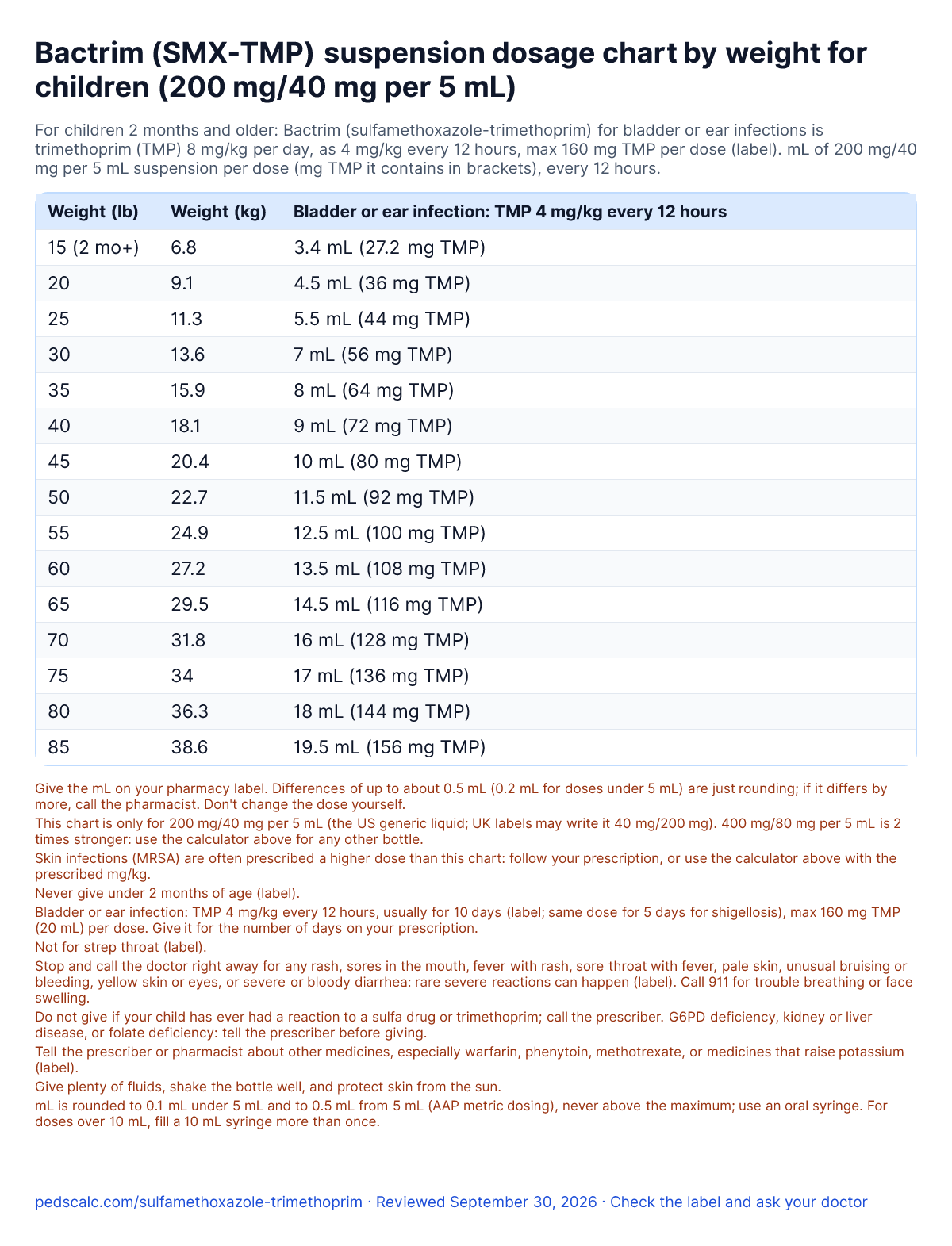
Bactrim (SMX-TMP) suspension dosage chart by weight for children (200 mg/40 mg per 5 mL)
For children 2 months and older: Bactrim (sulfamethoxazole-trimethoprim) for bladder or ear infections is trimethoprim (TMP) 8 mg/kg per day, as 4 mg/kg every 12 hours, max 160 mg TMP per dose (label). Doses are set by the TMP part. Each 5 mL has TMP 40 mg and SMX 200 mg, so the SMX amount is always 5 times the TMP: for example, 10 mL = TMP 80 mg + SMX 400 mg. If a prescription gives the dose in mg, check whether it is the TMP or the SMX number.
- Give the mL on your pharmacy label. Differences of up to about 0.5 mL (0.2 mL for doses under 5 mL) are just rounding; if it differs by more, call the pharmacist. Don't change the dose yourself.
- This chart is only for 200 mg/40 mg per 5 mL (the US generic liquid; UK labels may write it 40 mg/200 mg). 400 mg/80 mg per 5 mL is 2 times stronger: use the calculator above for any other bottle.
- Skin infections (MRSA) are often prescribed a higher dose than this chart: follow your prescription, or use the calculator above with the prescribed mg/kg.
- Never give under 2 months of age (label).
| Weight (lb) | Weight (kg) | Bladder or ear infection: TMP 4 mg/kg every 12 hoursmL of 200 mg/40 mg per 5 mL suspension per dose (mg TMP it contains) |
|---|---|---|
| 15check age: never under 2 months | 6.8 | 3.4 mL (27.2 mg TMP) |
| 20 | 9.1 | 4.5 mL (36 mg TMP) |
| 25 | 11.3 | 5.5 mL (44 mg TMP) |
| 30 | 13.6 | 7 mL (56 mg TMP) |
| 35 | 15.9 | 8 mL (64 mg TMP) |
| 40 | 18.1 | 9 mL (72 mg TMP) |
| 45 | 20.4 | 10 mL (80 mg TMP) |
| 50 | 22.7 | 11.5 mL (92 mg TMP) |
| 55 | 24.9 | 12.5 mL (100 mg TMP) |
| 60 | 27.2 | 13.5 mL (108 mg TMP) |
| 65 | 29.5 | 14.5 mL (116 mg TMP) |
| 70 | 31.8 | 16 mL (128 mg TMP) |
| 75 | 34 | 17 mL (136 mg TMP) |
| 80 | 36.3 | 18 mL (144 mg TMP) |
| 85 | 38.6 | 19.5 mL (156 mg TMP) |
- Bladder or ear infection: TMP 4 mg/kg every 12 hours, usually for 10 days (label; same dose for 5 days for shigellosis), max 160 mg TMP (20 mL) per dose. Give it for the number of days on your prescription.
- Not for strep throat (label).
- Stop and call the doctor right away for any rash, sores in the mouth, fever with rash, sore throat with fever, pale skin, unusual bruising or bleeding, yellow skin or eyes, or severe or bloody diarrhea: rare severe reactions can happen (label). Call 911 for trouble breathing or face swelling.
- Do not give if your child has ever had a reaction to a sulfa drug or trimethoprim; call the prescriber. G6PD deficiency, kidney or liver disease, or folate deficiency: tell the prescriber before giving.
- Tell the prescriber or pharmacist about other medicines, especially warfarin, phenytoin, methotrexate, or medicines that raise potassium (label).
- Give plenty of fluids, shake the bottle well, and protect skin from the sun.
- mL is rounded to 0.1 mL under 5 mL and to 0.5 mL from 5 mL (AAP metric dosing), never above the maximum; use an oral syringe. For doses over 10 mL, fill a 10 mL syringe more than once.
Bactrim TMP component
Bactrim and TMP-SMX dose calculator details for liquid dosing
Bactrim and TMP-SMX plans should be calculated from the trimethoprim component, then converted into 200/40 mg per 5 mL liquid or tablet strengths.
Formula
mL per dose = prescribed trimethoprim mg per dose / (40 mg trimethoprim / 5 mL), which equals TMP mg per dose / 8 mg per mL.
Worked example
For an 80 mg trimethoprim dose using 200/40 mg per 5 mL liquid, the measured volume is 10 mL per dose.
Safety checks before using the result
- Dose by trimethoprim unless the prescription clearly states otherwise.
- Confirm the exact 200/40 mg per 5 mL concentration before measuring.
- Escalate rash, severe diarrhea, jaundice, or dehydration symptoms promptly.
Practical dosing guide
Before you measure the dose
Use this page to dose TMP-SMX by the trimethoprim component, match the right liquid or tablet strength, and double-check the skin-rash and hydration cautions before starting.
- How to dose Bactrim
- Always calculate pediatric TMP-SMX using the trimethoprim component.
- UTI or susceptible outpatient infection
- Many pediatric outpatient TMP-SMX plans are given twice daily when the organism and child fit that antibiotic choice.
- Skin or MRSA-focused use
- Some skin and soft-tissue plans use TMP-SMX when MRSA or local susceptibility makes it the better fit, but the schedule still needs to be matched to the written prescription.
Sulfamethoxazole - Trimethoprim pediatric medication summary
Bactrim (sulfamethoxazole-trimethoprim, TMP-SMX, co-trimoxazole, Septra) treats UTIs, skin infections, and other bacterial illnesses. The Bactrim pediatric dose calculator converts weight-based TMP-SMX dosing based on the trimethoprim component into practical doses.
Choose SMX-TMP for purulent skin and soft-tissue infections when MRSA is suspected, but pair with beta-lactam therapy if group A streptococcal coverage is needed.
For PJP prophylaxis in children with HIV, solid organ transplants, or oncology diagnoses, low-dose regimens significantly reduce morbidity—ensure adherence and lab monitoring.
Sulfamethoxazole - Trimethoprim indications and common pediatric uses
Sulfamethoxazole-trimethoprim (TMP-SMX) is useful in pediatrics when susceptibility is likely or documented, especially for select urinary, skin, and opportunistic infections where narrower options are limited.
Uncomplicated urinary tract infection (cystitis)
Pneumocystis jirovecii pneumonia (treatment or prophylaxis)
Shigellosis or susceptible traveler's diarrhea
Acute otitis media (susceptible organisms)
Community-acquired MRSA skin and soft tissue infections
Community-acquired MRSA skin and soft tissue infections: Use when MRSA is suspected or confirmed; combine with drainage when abscess present.
Nocardiosis
Nocardiosis: Often requires prolonged therapy and specialist management.
How to give Sulfamethoxazole - Trimethoprim
- Sulfamethoxazole-trimethoprim provides powerful dual antibiotic therapy with convenient twice-daily dosing. Its effectiveness against resistant organisms like MRSA and common UTI pathogens makes it invaluable for specific pediatric infections.
Sulfamethoxazole - Trimethoprim side effects, contraindications, and interactions
Sulfamethoxazole-trimethoprim has one of the highest risks for severe cutaneous adverse reactions among all medications, with a relative risk of 160-172 for Stevens-Johnson syndrome. While generally effective for bacterial infections, the drug carries significant risks in pediatric patients including hypersensitivity reactions (1-3% in healthy children), hyperkalemia, and bone marrow suppression. It is contraindicated in infants under 2 months due to toxicity concerns. Immediate discontinuation is required at the first sign of any rash, as this may herald life-threatening reactions.
Common side effects
- Stevens-Johnson Syndrome and Severe Cutaneous Reactions: Sulfamethoxazole-trimethoprim has the highest relative risk (160-172x) for Stevens-Johnson syndrome among all medications, accounting for 69% of antibiotic-related SJS cases. Other severe reactions include toxic epidermal necrolysis, DRESS syndrome, and acute generalized exanthematous pustulosis. Can be fatal and typically occurs 1-3 weeks after initiation. Management: Discontinue immediately at first sign of any rash, seek emergency care for widespread skin involvement, supportive care in burn unit if severe. Monitoring: Watch for any skin rash, fever, mouth sores, or eye irritation; educate families about emergency nature of any rash development.
- Hypersensitivity and Allergic Reactions: High incidence of hypersensitivity reactions, especially during the second week of therapy. Can include respiratory symptoms (cough, shortness of breath, pulmonary infiltrates), gastrointestinal effects, and systemic reactions. Anaphylaxis and circulatory shock can occur within minutes to hours of re-exposure. Management: Discontinue at first sign of hypersensitivity, antihistamines and corticosteroids for mild reactions, epinephrine for anaphylaxis. Monitoring: Watch for rash, fever, pharyngitis, arthralgia, cough, chest pain, dyspnea, or any systemic symptoms.
- Hyperkalemia and Electrolyte Disturbances: Trimethoprim decreases urinary potassium excretion, leading to potentially dangerous hyperkalemia, especially with high doses or renal insufficiency. Documented cases in infants as young as 4 months. Can cause cardiac arrhythmias and muscle weakness. Hyponatremia may also occur. Management: Monitor electrolytes especially in high-risk patients, reduce dose or discontinue if hyperkalemia develops, ensure adequate renal function. Monitoring: Watch for muscle weakness, irregular heartbeat, numbness, tingling, or breathing difficulties.
Safety checks
- Prior severe hypersensitivity to sulfamethoxazole, trimethoprim, or another sulfonamide antibiotic (e.g., anaphylaxis, SJS/TEN)
- Age under 2 months (kernicterus risk from bilirubin displacement)
- Megaloblastic anemia due to folate deficiency
- Severe renal impairment when dose adjustment and laboratory monitoring cannot be performed safely
- Moderate renal impairment or reduced creatinine clearance (requires individualized dosing and follow-up)
- G6PD deficiency (hemolysis risk)
Drug interactions
- Review the full medication list with a clinician or pharmacist before combining therapies.
Sulfamethoxazole - Trimethoprim mechanism and clinical pearls
Sulfamethoxazole-trimethoprim (SMX-TMP) works because the two components interrupt the same bacterial pathway at different points. Sulfamethoxazole blocks dihydropteroate synthase and limits upstream folate precursor formation, while trimethoprim blocks dihydrofolate reductase and prevents conversion to active tetrahydrofolate. With both steps constrained, susceptible bacteria cannot maintain nucleotide production needed for replication and repair. In practice, this is why the combination performs better than either agent alone for selected infections. The fixed 5:1 SMX:TMP formulation is built to produce clinically useful paired concentrations rather than treating each ingredient as an independent monotherapy. Host cells are less affected because humans rely on dietary folate, but clinically relevant off-target effects still occur, including antifolate-related cytopenias and trimethoprim-associated potassium elevation in higher-risk patients.
Extra fluids lower sulfonamide crystalluria risk; give families a concrete fluid target for the treatment window.
Calculate doses from the trimethoprim component and confirm bottle concentration before converting to mL.
Plan sunscreen and protective clothing from day 1; brief midday exposure can still trigger significant reactions in sensitive patients.
Plan potassium checks when TMP-SMX is used with ACE-I/ARB/spironolactone or in kidney dysfunction.
High oral bioavailability allows oral therapy for many serious infections once clinically stable.
Frequently asked questions about Sulfamethoxazole - Trimethoprim
SMX-TMP treats a range of bacterial infections, including urinary tract infections, certain gastrointestinal infections (e.g., traveler's diarrhea, Shigella), and skin infections caused by MRSA. It’s also used for rare but serious infections like *Pneumocystis jirovecii* pneumonia (PCP) in immunocompromised children and for *Nocardia* infections. While not a first-line antibiotic for most respiratory infections, it is used when there are resistant organisms or allergies to other antibiotics. Providers typically choose SMX-TMP for targeted reasons due to its side effect profile.
The most common side effects include mild rash, nausea, vomiting, and loss of appetite. Some children experience diarrhea or sun sensitivity. Rare but serious side effects include severe skin reactions like Stevens-Johnson syndrome and blood disorders (such as low platelets or white blood cells). If your child develops any rash, mouth sores, signs of bruising, or acts unusually tired, call your doctor right away. Most children tolerate the medication well, especially when used short term and monitored closely.
SMX-TMP is given by mouth as a liquid or tablet, usually twice daily. The liquid should be shaken well before each dose and measured with an accurate dosing device like an oral syringe. It can be given with or without food – but giving it with a small snack or drink may help reduce nausea. Encourage your child to drink plenty of fluids while on the medication. Always follow the dosing schedule exactly and finish the full course unless your doctor advises otherwise.
Always let your healthcare provider know about any medications your child takes, including over-the-counter drugs and supplements. SMX-TMP can interact with medications like methotrexate, phenytoin, diuretics, or ACE inhibitors, increasing the risk of side effects like kidney problems or high potassium. Your provider will evaluate for interactions before prescribing it. Do not give any new medications or supplements during the course unless cleared by the doctor.
No. SMX-TMP should not be used in infants younger than 2 months due to the risk of kernicterus, a serious neurological condition caused by high bilirubin levels. In older infants and children, it is generally safe when dosed appropriately, but always under medical supervision. If your child is younger than 2 months and needs treatment, the provider will select an alternative antibiotic.
Yes. Bactrim is a brand name for sulfamethoxazole-trimethoprim (TMP-SMX). Dosing is based on the trimethoprim component in mg/kg/day.
Use the trimethoprim component in mg/kg/day, not the sulfamethoxazole number. The calculator converts that TMP-based target into a practical liquid or tablet regimen for your child’s weight.
Sources reviewed for Sulfamethoxazole - Trimethoprim
aap-uti-2011
dailymed-bactrim-setid-f59d0c04
nih-pcp-children-2024
cdc-shigella-2024
aap-aom-2013
idsa-ssti-2014