

Children's Benadryl (Diphenhydramine) Dosage Chart
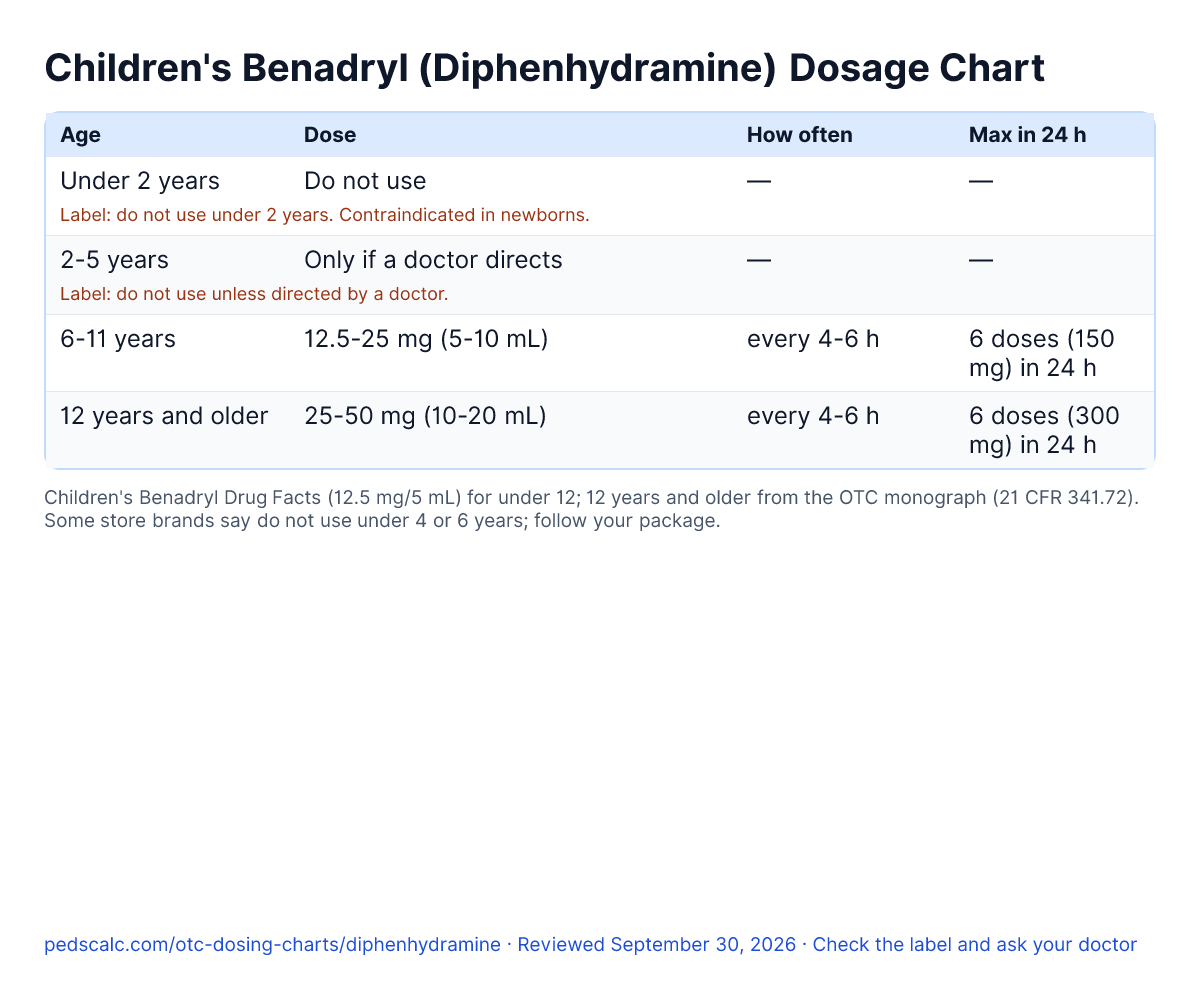
Children's Benadryl is labeled by age: 6-11 years, 5-10 mL (12.5-25 mg) of 12.5 mg/5 mL liquid every 4-6 hours, no more than 6 doses in 24 hours. Do not use under 2 years; ages 2-5 only if a doctor directs.
Benadryl (diphenhydramine) dosage chart by age
| Age | Dose | Interval | Max daily | Notes |
|---|---|---|---|---|
| Under 2 years | Do not use | — | — | Label: do not use under 2 years. Contraindicated in newborns. |
| 2-5 years | Only if a doctor directs | — | — | Label: do not use unless directed by a doctor. |
| 6-11 years | 12.5-25 mg (5-10 mL) | every 4-6 h | 6 doses (150 mg) in 24 h | — |
| 12 years and older | 25-50 mg (10-20 mL) | every 4-6 h | 6 doses (300 mg) in 24 h | — |
Children's Benadryl Drug Facts (12.5 mg/5 mL) for under 12; 12 years and older from the OTC monograph (21 CFR 341.72). Some store brands say do not use under 4 or 6 years; follow your package.
Sources: MedlinePlus; NHS (links below). . This chart does not replace the product label or your clinician's advice.
Is there a Benadryl dosage chart by weight?
The Children's Benadryl label doses by age, not weight. Some pediatric offices publish weight-based tables for clinicians (for example, the Schmitt pediatric guidelines used by several children's hospitals), and some of them start at younger ages than the label. Use a weight-based dose only if your child's own clinician gives it to you. If your child is much smaller or larger than others their age, ask your pediatrician or pharmacist.
Check the bottle first
Which bottle do I have?
- Liquid 12.5 mg/5 mL
- Chewables 12.5 mg
- Tablets 25 mg
Match the strength printed on your bottle or package (mg per mL, per 5 mL, or per tablet) before using the chart.
Safety checks before dosing
- Use diphenhydramine for acute allergic reactions or itching, not routine colds or sleep.
- Do not use with any other product containing diphenhydramine, even one used on skin (creams, sprays) (label).
- Do not use to make a child sleepy (label). Avoid combining with other sedating medicines.
- Ages 6-11: no more than 25 mg per dose or 150 mg in 24 hours (label).
When to call a doctor
- Symptoms get worse or do not improve after appropriate dosing.
- Your child has a chronic condition, kidney or liver disease, or takes other medicines.
- You are unsure about the concentration or the correct dose.
Need a dose for your child's age and product?
- Diphenhydramine (Benadryl) dose calculator — enter age and weight to check the label dose and the mL for your bottle.
- Printable Benadryl dosing chart
- All children's OTC dosing charts
Frequently asked questions
Every 4-6 hours as needed, no more than 6 doses in 24 hours (label).
No. Professional guidance discourages diphenhydramine as a sleep aid in children.
Yes. Benadryl is a brand name for diphenhydramine.
Some children have paradoxical excitation. Hold the next dose and contact your clinician for guidance.
Avoid stacking sedating antihistamines. Non-sedating options like cetirizine can be used under clinician guidance.