

PedsCalc Pro
No ads, plus saved calculations and notes in the Pro app.
$19.99/year, about $1.67/month. Cancel anytime.
Children's Claritin (Loratadine) Dosage Chart by Age
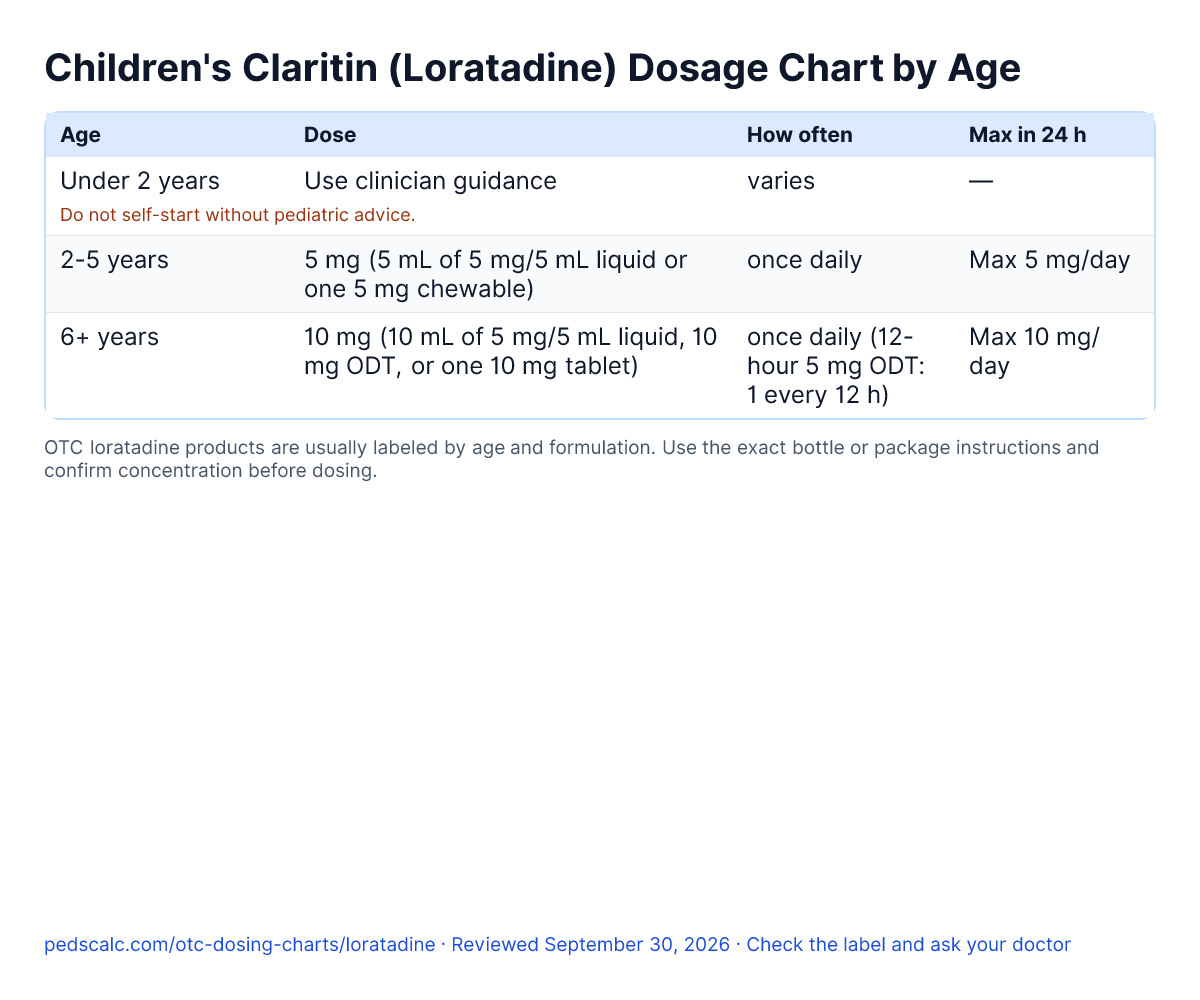
Children's Claritin is labeled by age: 2-5 years, 5 mL (5 mg) of 5 mg/5 mL liquid once daily; 6 years and older, 10 mg once daily. Under 2 years, ask a doctor.
Claritin (loratadine) dosage chart by age
| Age | Dose | Interval | Max daily | Notes |
|---|---|---|---|---|
| Under 2 years | Use clinician guidance | varies | — | Do not self-start without pediatric advice. |
| 2-5 years | 5 mg (5 mL of 5 mg/5 mL liquid or one 5 mg chewable) | once daily | Max 5 mg/day | — |
| 6+ years | 10 mg (10 mL of 5 mg/5 mL liquid, 10 mg ODT, or one 10 mg tablet) | once daily (12-hour 5 mg ODT: 1 every 12 h) | Max 10 mg/day | — |
OTC loratadine products are usually labeled by age and formulation. Use the exact bottle or package instructions and confirm concentration before dosing.
Sources: Medicines for Children; NHS; MedlinePlus (links below). . This chart does not replace the product label or your clinician's advice.
Is there a Claritin dosage chart by weight?
No. The Claritin (loratadine) label doses by age, not weight: 5 mg for ages 2-5 and 10 mg from age 6. Ask your pediatrician or pharmacist for children under 2 or if your child is much smaller or larger than others their age.
Which bottle do I have?
- Liquid 5 mg/5 mL
- Chewables 5 mg
- ODT 10 mg
- Tablets 10 mg
Match the strength printed on your bottle or package (mg per mL, per 5 mL, or per tablet) before using the chart.
Safety checks before dosing
- Use the exact product strength on the label before measuring a dose.
- Avoid doubling with desloratadine or other daily antihistamines unless your clinician directs it.
- Mild drowsiness is uncommon but possible; bedtime dosing can help if your child seems sleepy.
When to call a doctor
- Symptoms get worse or do not improve after appropriate dosing.
- Your child has a chronic condition, kidney or liver disease, or takes other medicines.
- You are unsure about the concentration or the correct dose.
Need a dose for your child's age and product?
- Loratadine (Claritin) dose calculator — enter age and weight to check the label dose and the mL for your bottle.
- Printable Claritin dosing chart
- All children's OTC dosing charts
Frequently asked questions
It is an age-based quick reference for loratadine (Claritin). Most OTC products use 5 mg once daily for ages 2-5 years and 10 mg once daily for ages 6 years and older.
Yes. Claritin is a brand name for loratadine.
Liquid is often easiest for younger children, while chewables or ODT forms can work well for school-age kids who dislike liquid.
Yes, once-daily use is common during allergy season or for chronic hives when your clinician recommends it.
Most children stay alert on loratadine, but mild sleepiness can still happen in some kids.